
The Role of High-Temperature Conveyor Belts
Choosing the most suitable belt depends not only on thermal strain but also on chemical and mechanical stresses.
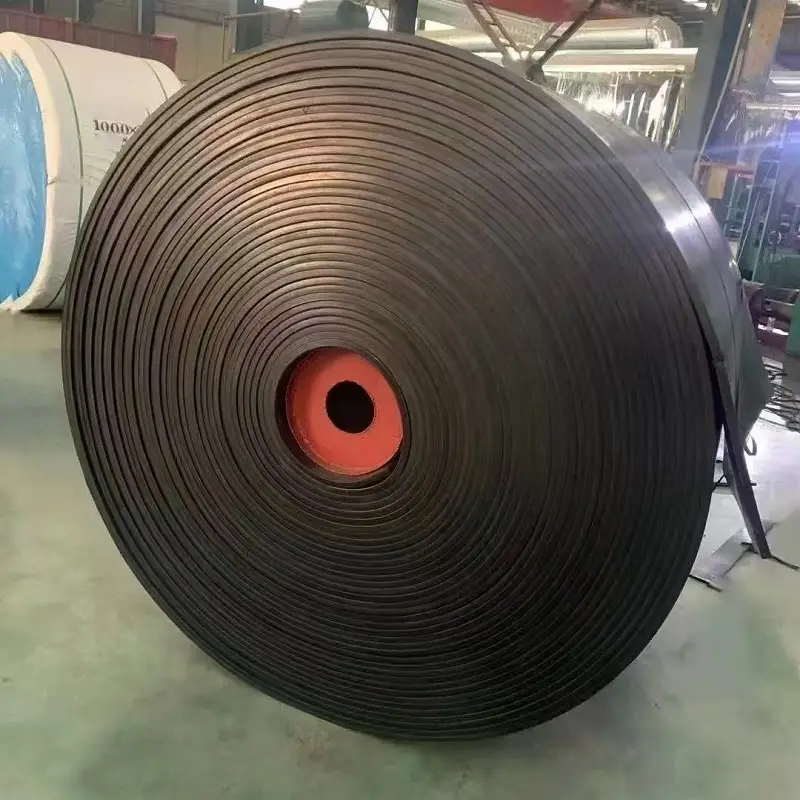
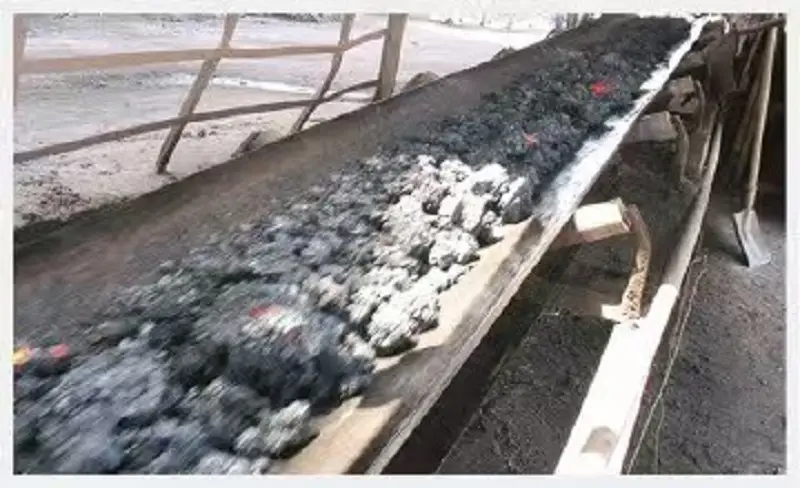
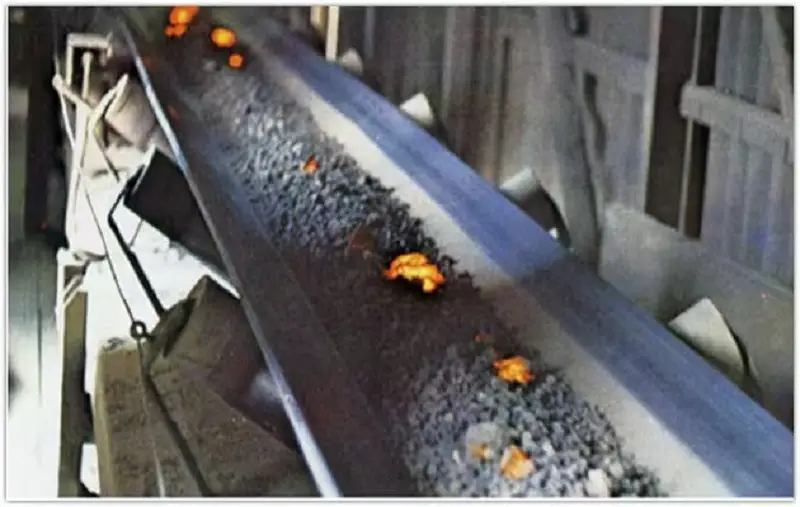
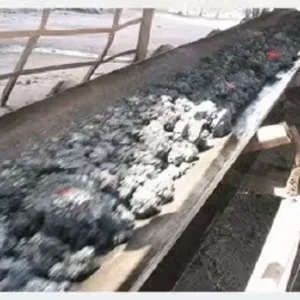
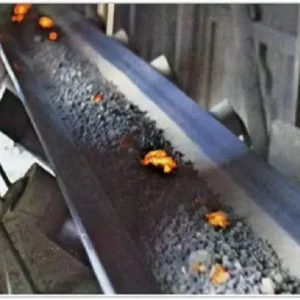
The temperature of the conveyed material and the belt surface temperature vary significantly depending on the material’s composition, properties, surface structure, and particle count. For example, when the temperature of bulk material (coke or sintered ore) is 150°C and the particle contact area is relatively small, the belt surface temperature can be maintained at 60°C-80°C. However, when conveying cement powder, the difference between the material temperature and the belt surface temperature is minimal. The belt’s lifespan is significantly affected by the belt’s surface temperature, which can lead to rubber slugging and delamination of the belt core. Therefore, when selecting a belt, it is crucial to consider the belt’s surface temperature, the ambient temperature, adequate belt cooling during return, belt speed, and center (longitudinal) conveying distance. A thicker rubber cover is crucial for ensuring a long belt life. We recommend a 4.5-8mm upper cover and a 2-4mm lower cover for fabric-core belts.
Choosing the most suitable belt depends not only on thermal strain but also on chemical and mechanical stresses.
The temperature of the conveyed material and the belt surface temperature vary significantly depending on the material’s composition, properties, surface structure, and particle count. For example, when the temperature of bulk material (coke or sintered ore) is 150°C and the particle contact area is relatively small, the belt surface temperature can be maintained at 60°C-80°C. However, when conveying cement powder, the difference between the material temperature and the belt surface temperature is minimal. The belt’s lifespan is significantly affected by the belt’s surface temperature, which can lead to rubber slugging and delamination of the belt core. Therefore, when selecting a belt, it is crucial to consider the belt’s surface temperature, the ambient temperature, adequate belt cooling during return, belt speed, and center (longitudinal) conveying distance. A thicker rubber cover is crucial for ensuring a long belt life. We recommend a 4.5-8mm upper cover and a 2-4mm lower cover for fabric-core belts.
The physical and mechanical properties of the tropical cover should comply with the following table
|
Project
|
T1(1 type)
|
T2(2 type)
|
T3(3 type)
|
T4(4 type)
|
||
|
Hardness
|
Draw the intensity
|
–
|
+20
|
+20
|
+20
|
+20
|
|
Hardness
|
Maximum after wearing out
|
–
|
–
|
–
|
85
|
–
|
|
Draw the intensity
|
The minimum value after wearing out
|
–
|
12
|
10
|
5
|
5
|
|
Draw the intensity
|
Performance rate of change
|
–
|
-25
|
-30
|
-40
|
-40
|
|
Break person who extend
|
Performance rate of change
|
–
|
-50
|
-50
|
-55
|
-55
|
|
Break person who extend
|
Maximum after wearing out
|
–
|
200
|
200
|
180
|
180
|


Reviews
There are no reviews yet.